
Running a Multi-Site FF&E Liquidation: How National Chains Standardize Store Closures
When a national chain closes locations, the hard part is rarely what a display fixture or a walk-in cooler is worth. It is the calendar. Lease surrender dates, restoration clauses, and handover deadlines all arrive at once, across every site, and the assets inside each building have to be gone before the keys change hands. The chains that come through this well have one thing the others don't: a standardized program that treats every closure the same way.
That is what turns a portfolio of store closings from a series of one-off scrambles into a single, predictable process. This is how national retailers run a multi-site FF&E liquidation — the sale of furniture, fixtures, and equipment left behind when stores close — and why a standardized approach protects both your recovery and your timeline.
The short answer: National retailers manage multi-site FF&E liquidation by running one standardized auction program across every location — a single partner, a repeatable process, and centralized reporting — instead of handling each store on its own. Standardization is what keeps results consistent and deadlines intact as the number of sites grows.
Inventory Liquidation and Fixture Auctions Are Two Different Projects
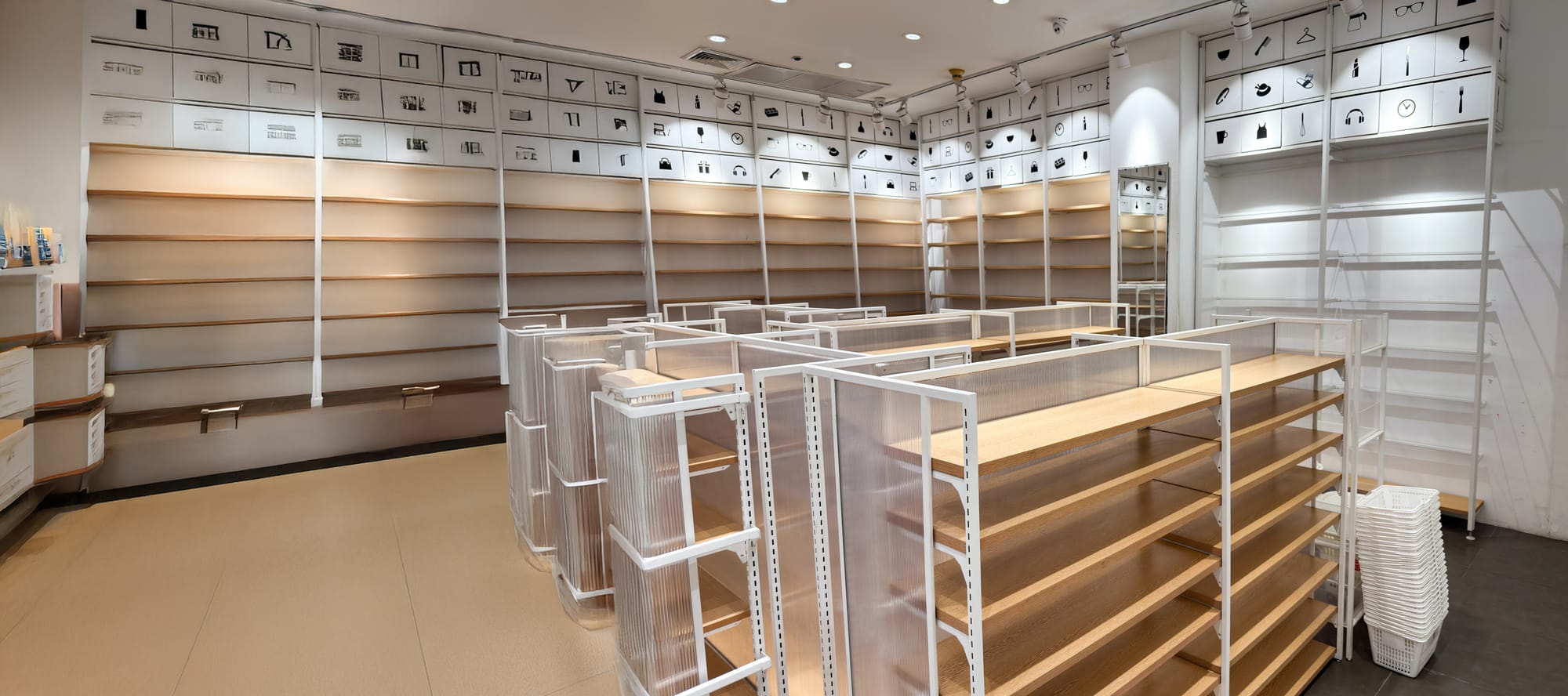
These are not the same job, and treating them as one is a common early mistake. Inventory liquidation clears the merchandise on the shelves, usually through a going-out-of-business sale. A fixture auction recovers the physical assets that stay behind — display fixtures, gondola shelving, checkout counters, refrigeration, back-of-house equipment, and racking.
This article is about the second one. When we talk about FF&E, we mean the built environment of the store itself, and auction is the method that consistently recovers the most value for it across many locations at once.

Why a Standardized Program Beats a Site-by-Site Approach
A standardized program delivers predictable recovery with far less internal lift than handling each closure on its own. When every location runs through the same process, you get advantages that piecemeal local sales cannot match:
- Consistency. Every site is cataloged, marketed, and sold the same way, so results don't swing based on who handled which store.
- Speed at scale. A repeatable process compresses the time from decision to load-out, which matters when deadlines stack up.
- One point of contact. Your team manages one partner and one relationship, not a different local operator in every market.
- Centralized reporting. You receive lot-level results and reconciled settlements in one place, per site and across the portfolio.
- Brand control. A single program applies the same rules for signage, logos, and data at every location.
The site-by-site alternative spreads the work across your operations and real estate teams during the exact weeks they can least afford it, and it leaves you reconciling a dozen different reports in a dozen different formats.


The Multi-Site FF&E Playbook, Step by Step
A program that scales is really one repeatable per-site process applied across the whole portfolio. Here is what that looks like:
- Standardized asset mapping. We apply one cataloging template to every location, so a fixture in a Texas store is inventoried and photographed the same way as its counterpart in Ohio. Consistent data in means consistent results out.
- Scheduling in waves. Sites are sequenced to fit your surrender dates — some staggered, some run simultaneously — so the program matches your real-world calendar rather than fighting it.
- National marketing. Each sale is marketed to our registered bidder network of more than 300,000 buyers. Because our auctions are online, every location draws a national audience regardless of where the store sits.
- Running the sale. Each site's assets sell lot by lot through a competitive online auction, so pricing is set by the market and visible in real time. Sale terms are structured to fit the program and your goals for each location.
- Removal and disconnect. Removal is coordinated in scheduled windows after each sale closes, with any required equipment disconnection and rigging planned into the timeline. Where refrigeration is involved, the seller handles refrigerant reclaim before removal.
- Centralized reporting. You receive a reconciled, lot-level settlement for every location, rolled up so you can see the whole portfolio at a glance.
Pro Tip: The single biggest lever on a smooth multi-site program is a standardized asset list. If your locations use the same categories and naming from the start, cataloging moves faster, reporting lines up cleanly, and nothing that was supposed to stay behind accidentally goes up for bid.
A Standardized Program in Action
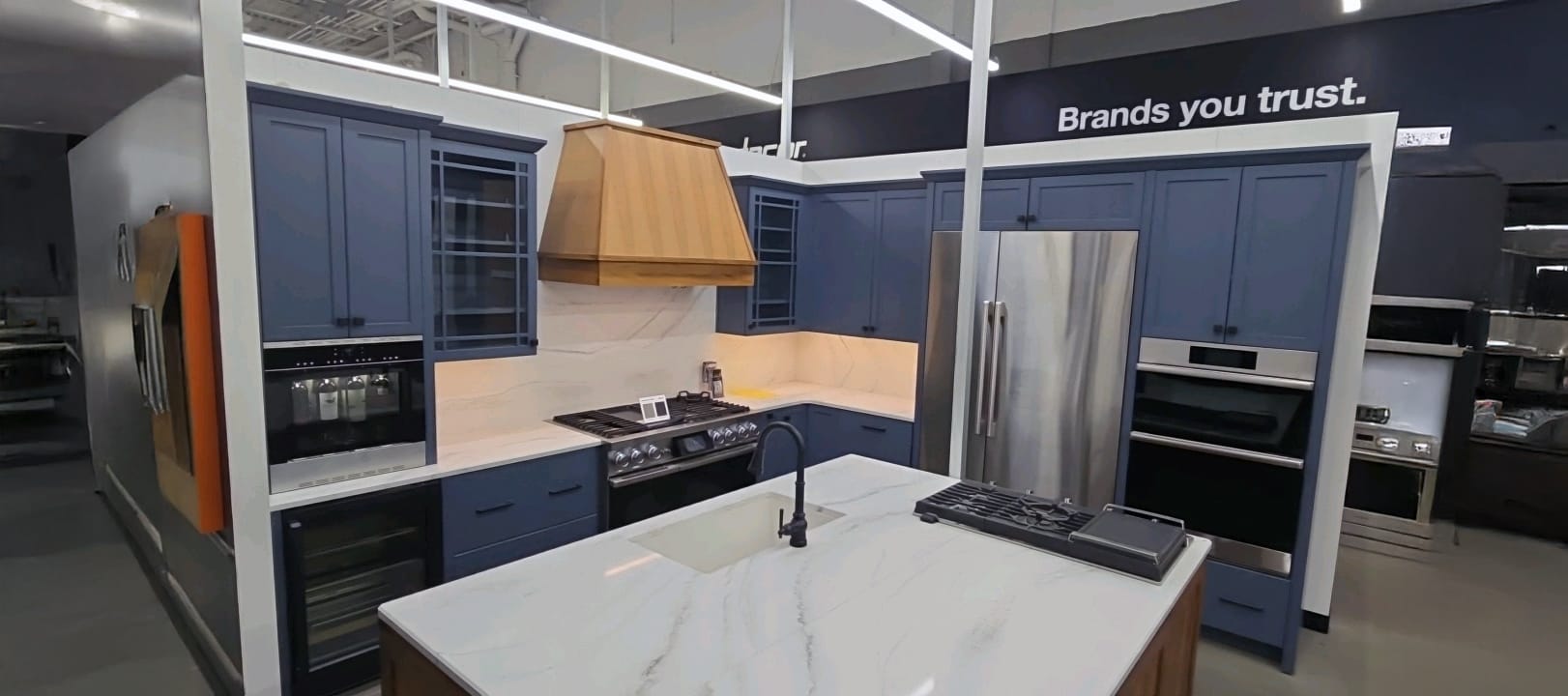
Coordinating closures across several states in a matter of weeks is exactly the work a standardized program is built for. We recently ran a series of three Home Depot Design Center showroom auctions in Vauxhall, New Jersey; Rockville, Maryland; and San Diego, California, all closing within about three weeks of each other. The same process ran at each site, one national buyer audience competed across all three, and reporting was handled location by location. (For the full results of those sales, see our Home Depot Design Center customer spotlight.)

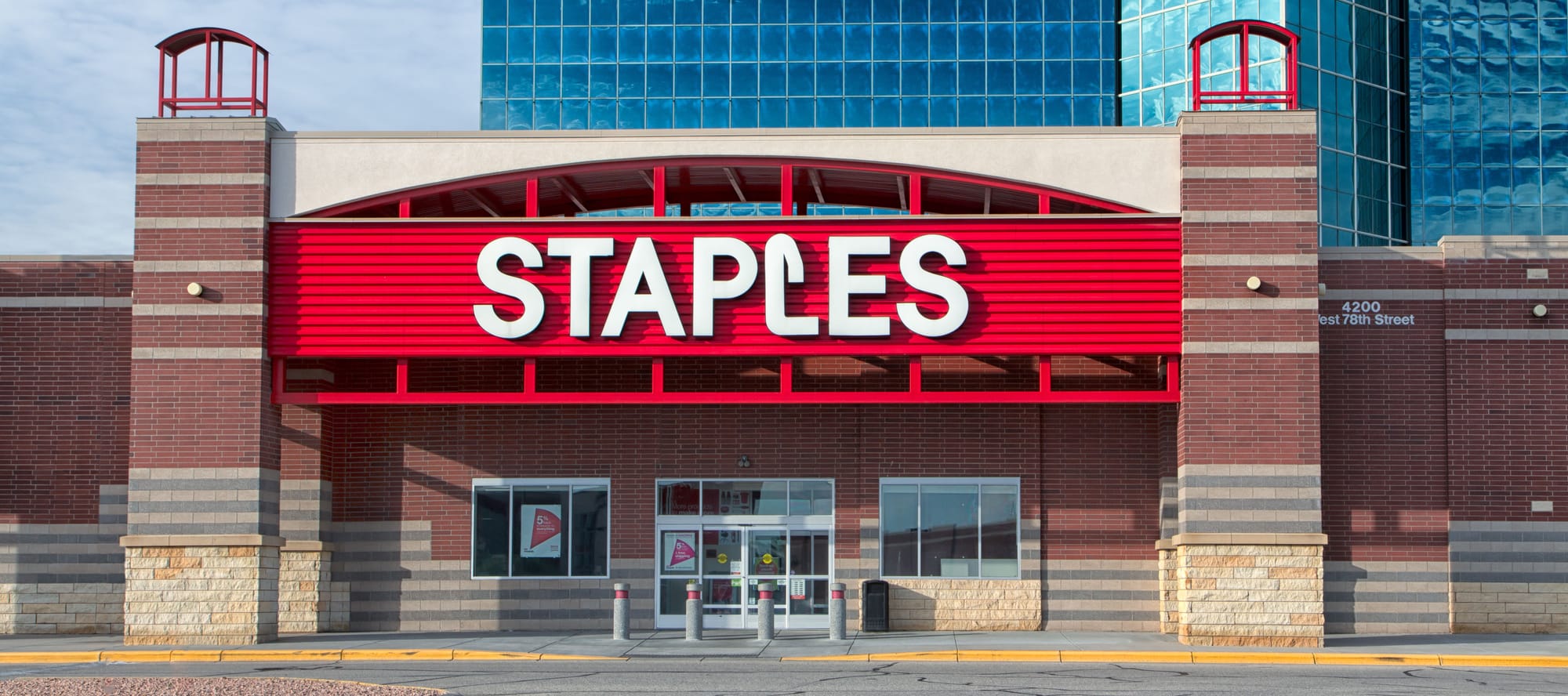
Our longer-running partnership with Staples shows the same model applied across a national retail footprint. In both cases, the win wasn't any single auction. It was a repeatable system that produced consistent outcomes site after site — which is the entire point of running a program instead of a string of separate sales.

Protecting Your Brand: Signage, IP, and Data
A real program spells out how your brand is protected before anything sells. Branded signage, logos, proprietary displays, and any data-bearing equipment need clear rules for what gets excluded, removed, or wiped, applied identically at every location. For a national chain, a fixture carrying your logo showing up in the wrong hands is a bigger problem than a few dollars of lost recovery. We document these decisions up front so the same standard holds across the portfolio, and nothing leaves a building that shouldn't.
Build Removal Into the Plan, Not After It
The heavy, bolted-down categories decide whether you hit your handover date. Pallet racking, refrigeration, and large fixtures have to be removed safely and in sequence, often around structural anchoring and fire suppression. A standardized program builds removal windows and rigging into the schedule from the start rather than improvising it store by store. Our team coordinates buyer removal in scheduled windows, so each building empties on a timeline you can actually promise to a landlord.

What to Ask a Multi-Site Partner
For a portfolio of closures, one retained auction partner with national reach outperforms a patchwork of local operators. When you evaluate a partner, ask:
- How large is your buyer network, and is it national? Recovery depends on demand, and demand depends on reach.
- Do you handle disconnect and removal, or does that fall to us? The answer determines how much lands on your team.
- What does your reporting look like across multiple sites? You want lot-level detail and a clean portfolio rollup, not a stack of mismatched spreadsheets.
- Can you show multi-site work you've done before? Proven coordination across locations is the whole game.
We've been running commercial auctions since 1959 and conduct roughly 290 auctions a year nationwide, a meaningful share of them multi-site corporate closures.
The Bottom Line
A standardized FF&E program turns dozens of store closings into one predictable process, run by one partner, reported in one place. For a national chain, that consistency is what protects both your asset recovery and the deadlines you cannot move.
If your team is planning a round of closures, talk to us about designing a multi-site program. We'll help you build a repeatable process before the first surrender date arrives.