
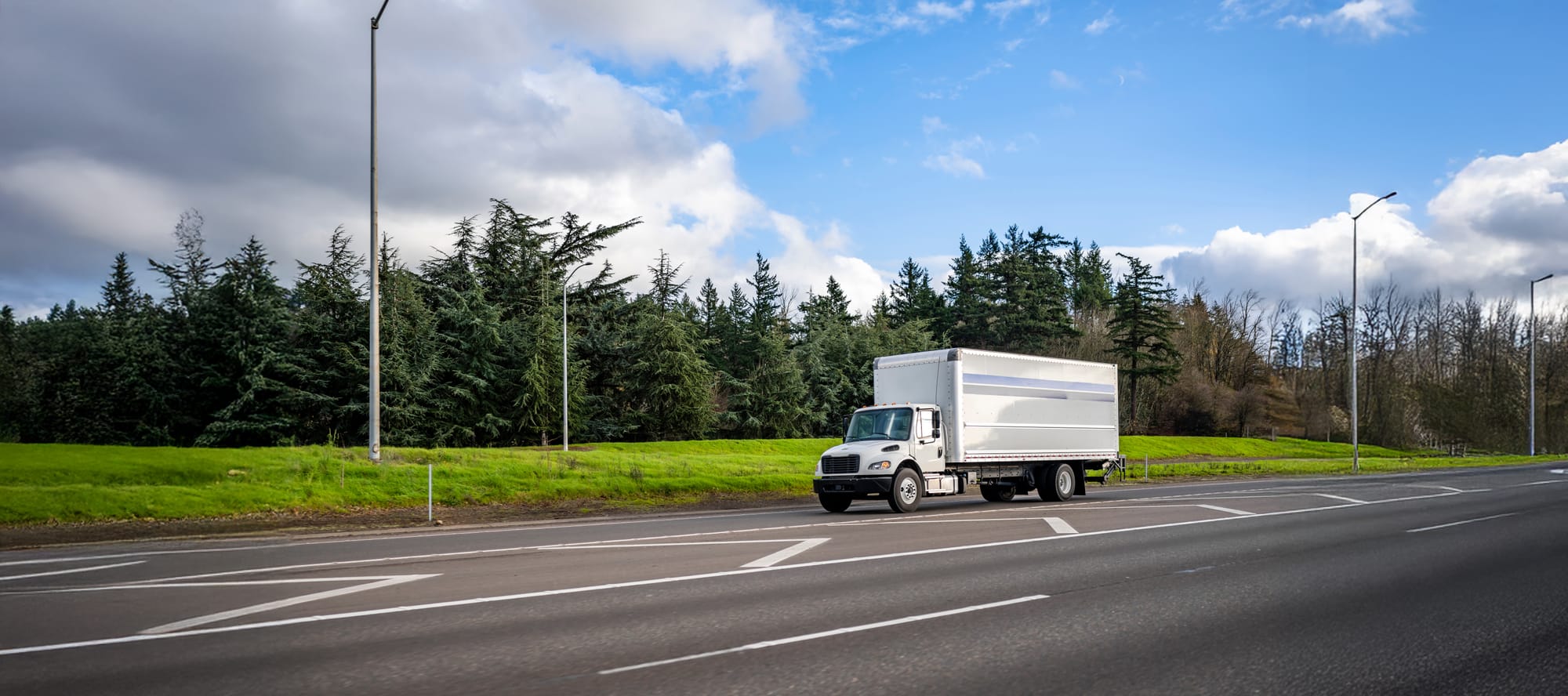
Buying used business equipment from another state means bidding on equipment you may never see in person, then getting it disconnected, loaded, and hauled home on someone else's schedule. Out-of-state buying works well when you plan the logistics before you bid. Grafe Auction runs about 290 online auctions a year across all 50 states plus Puerto Rico, and we have sold commercial and industrial equipment since 1959. A large share of the bidders on any given sale are buying from somewhere other than where the equipment sits.
The short answer: To buy used business equipment from another state safely, verify the lot remotely, line up a pickup agent or freight carrier before you bid, and schedule removal inside the auction's removal window.
How Do You Buy Equipment From an Out-of-State Auction? The Process at a Glance
Buying from an out-of-state Grafe Auction event follows eight steps.
- Read the event's Removal, Shipping Information and Special Terms document at the top of the auction page before you bid. It lists the removal dates, hours, and on-site contractor details.
- Study each lot's description, photos, and data plate image, and note whether it is listed as tested, untested, or removed from service.
- Send a local proxy to the preview, or ask specific questions by lot number.
- Get freight and rigging quotes while bidding is still open.
- Set your maximum bid based on your total landed cost, not the hammer price.
- Pay your invoice by noon the day after the auction closes.
- Schedule a removal appointment and send written authorization with whoever is picking up.
- Have the equipment disconnected, loaded, and off site before the removal window ends.
Steps 1 and 4 are the ones out-of-state buyers skip most often, and they prevent the most problems later.
What Should You Check Before Bidding on Equipment You Can't Inspect?
Start with the written lot description, because the description, not the photos, defines what is included in the lot. Then work through the photos and the auction terms with a specific list of questions.
- Read the data plate. Zoom in on the nameplate photo to pull the model number, serial number, voltage, phase, and amperage. Look up the manufacturer's spec sheet to confirm dimensions and utility requirements.
- Check the condition language. Grafe Auction listings note whether an item is tested, untested, or removed from service. Price untested equipment for the possibility of repairs.
- Confirm the quantity. Make sure you know whether the lot is a single item, a group of like items, or a choice lot.
- Know what's a separate lot. Supermarket display cases from Hussmann or Hill Phoenix run on a remote compressor rack, and we lot cases and compressors separately. Forklift batteries and chargers, Hobart mixer attachments, and pallet racking decking can also be cataloged on their own.
- Measure your own space. Doorways, ceiling heights, dock configuration, and electrical service at your facility decide what you can actually use.
If a detail matters and you can't find it, ask. A question like "does lot 214 include the compressor rack" gets a faster, more useful answer than a general inquiry. Our guide to reading an auction catalog listing walks through each part of a lot page.
Why does "as-is, where-is" matter more from a distance?
As-is, where-is means the equipment sells in its current condition and location, with no warranty or returns, and ownership transfers to you when the lot closes. From another state, the research you do before bidding is your inspection.
Can Someone Inspect the Equipment for You?
Yes. When an auction offers a preview, you can send a local proxy to inspect on your behalf. Match the proxy to the equipment: a refrigeration technician for True or Traulsen units, a forklift service tech for Crown or Toyota trucks, or a rigger for machinery, who can quote removal during the same visit.
Preview availability varies by auction, so check the event page first. Some sites are secured or under landlord restrictions that limit visitor access. When there is no preview, the catalog and your questions do the work. Our inspection day guide lists what to check by equipment category.
What Are Your Options for Getting Equipment Home From Another State?
Out-of-state buyers have four main options: drive and pick up yourself, send a local pickup agent, book a freight carrier, or hire a rigging crew for heavy assets. Most buyers combine two of them.
| Option | Best for | What to plan for |
|---|---|---|
| Drive it yourself | Smallwares, office equipment, single pieces within a day's drive | Travel time, the right vehicle, a second person, and tools |
| Local pickup agent | Buyers who can't travel, or who are consolidating several lots | Written authorization, ID copies, and somewhere to store or reship the items |
| Freight carrier | Palletized equipment, multi-lot wins, and long distances | Palletizing or crating, dock or liftgate access at both ends, and booking inside the window |
| Rigging crew | Heavy machinery, bolted equipment, long racking runs | Machine weight, site access, and a quote before you bid |
How do you choose a freight carrier?
Choose a carrier based on the size of the load and how it will be loaded. LTL (less-than-truckload) freight works for a few pallets that share a trailer with other shipments. A full truckload or dedicated box truck fits a whole restaurant kitchen or a large multi-lot win. Flatbeds handle forklifts, machinery, and long racking components.
Ask every carrier the same questions:
- Does the equipment need to be palletized, crated, or shrink-wrapped before pickup?
- Does the pickup site have a loading dock, or will the driver need a liftgate?
- Does your delivery address have a dock, a forklift, or enough people to unload?
Shipping is not automatically available through Grafe Auction. Arranging freight, and getting items prepared for shipment, is the buyer's responsibility. The on-site removal contractor may be willing to help prepare items for freight, but that is at the contractor's discretion and not guaranteed. Where available, we list suggested shipping and freight contacts in the Removal, Shipping Information and Special Terms section of each auction event page. Those carriers frequently work our sales and know the site, so they are a good first call.
Can Someone Else Pick Up Your Auction Items?
Yes. You can authorize someone else to pick up your items at a Grafe Auction removal. The person picking up must bring three things:
- Written authorization from you stating they are picking up your items. A simple note or email works.
- A copy of your ID, as a photo or photocopy.
- Their own ID.
That lets our removal team verify the authorization and release your items. If one person is picking up for several bidder accounts, such as a business partner's, they need authorization and an ID copy for each account. Send the authorization along with a copy of your paid receipt so the person at the door has everything in one place.
How Do You Time Freight Against the Removal Window?
Work backward from the removal window. Every Grafe Auction event publishes its removal dates and hours, and the window varies by auction type:
- Restaurant auctions typically allow 2 to 3 days.
- Supermarket and grocery auctions typically allow 5 to 7 days.
- Industrial auctions typically allow 5 days or more.
Restaurant windows are short because the space often needs to be cleared for the next tenant, which makes a distant restaurant auction the hardest timing case.
Here is how the timeline usually runs. Payment is due by noon the day after the auction closes. Once you have an active invoice, you can schedule a removal appointment from the invoice page or from the Removal Appointments option in your account. Book your appointment and your carrier for the same time slot, then confirm both a day ahead.
Items not removed by the end of the stated window are considered abandoned. They may be resold or disposed of, and you may be charged a disposal fee. If something goes wrong with a carrier, contact Grafe Auction as early as possible rather than letting the window close.
Who disconnects the equipment?
Disconnecting and removing what you buy is your responsibility. Equipment connected to gas, hardwired electrical, plumbing, or refrigeration often needs licensed trades to disconnect safely. Many events list an independent removal contractor on the auction page and at the bottom of your invoice. You hire them directly, they set their own rates, and they are not Grafe Auction employees. Services can vary by contractor, so confirm exactly which disconnects they will handle when you book. Book them before removal day, especially if you won't be there in person.
If you are buying refrigeration, the seller has the refrigerant reclaimed before the auction. Our guides to auction pickup day and transporting your new assets cover the details.
What Does It Really Cost to Buy From Out of State?
Your true cost is the hammer price plus the buyer's premium and sales tax, plus disconnect, loading, freight, and any repairs. Distance changes the freight line most. A lot that looks like a bargain across the country may cost more delivered than a similar lot one state over.
Sales tax is based on where the auction takes place, not where you live. Without a resale or exemption certificate on file before invoicing, you will see that state's rate on your invoice. A valid certificate from your home state works at most of our auctions, and we also accept the Streamlined Sales Tax certificate and the Multistate Tax Commission uniform certificate. See our sales tax and tax exemption guide for the details, and The Real Cost of Buying Equipment at Auction for a worked example.
What Protects You if an Item Isn't as Described?
Grafe Auction's terms protect buyers from material misdescriptions, not from normal wear. If a lot is materially different from its written description, such as the wrong model or a listed component missing, email our team within two business days of taking possession. Cosmetic wear isn't covered.
If a seller fails or refuses to deliver an item after you've paid in full, Grafe Auction will either work with the seller to arrange delivery or give a full refund of your purchase price, buyer's premium, and taxes, so out-of-state buyers should unpack and check equipment as soon as it arrives.
The Bottom Line
Buying equipment from another state comes down to doing your inspection and your logistics before you bid. Read the terms, verify the lot remotely, get freight quotes early, and send authorized help to the removal. With about 290 auctions a year across all 50 states plus Puerto Rico, Grafe Auction puts restaurant kitchens, grocery refrigeration, forklifts, racking, and shop equipment within reach of buyers anywhere. The distance is manageable when the plan comes first.
Browse our upcoming auctions, and reach out with removal or logistics questions on a specific lot before you place your first bid.