
Industrial & Manufacturing Equipment Auctions for Plants, Shops, Machinery & Production Assets
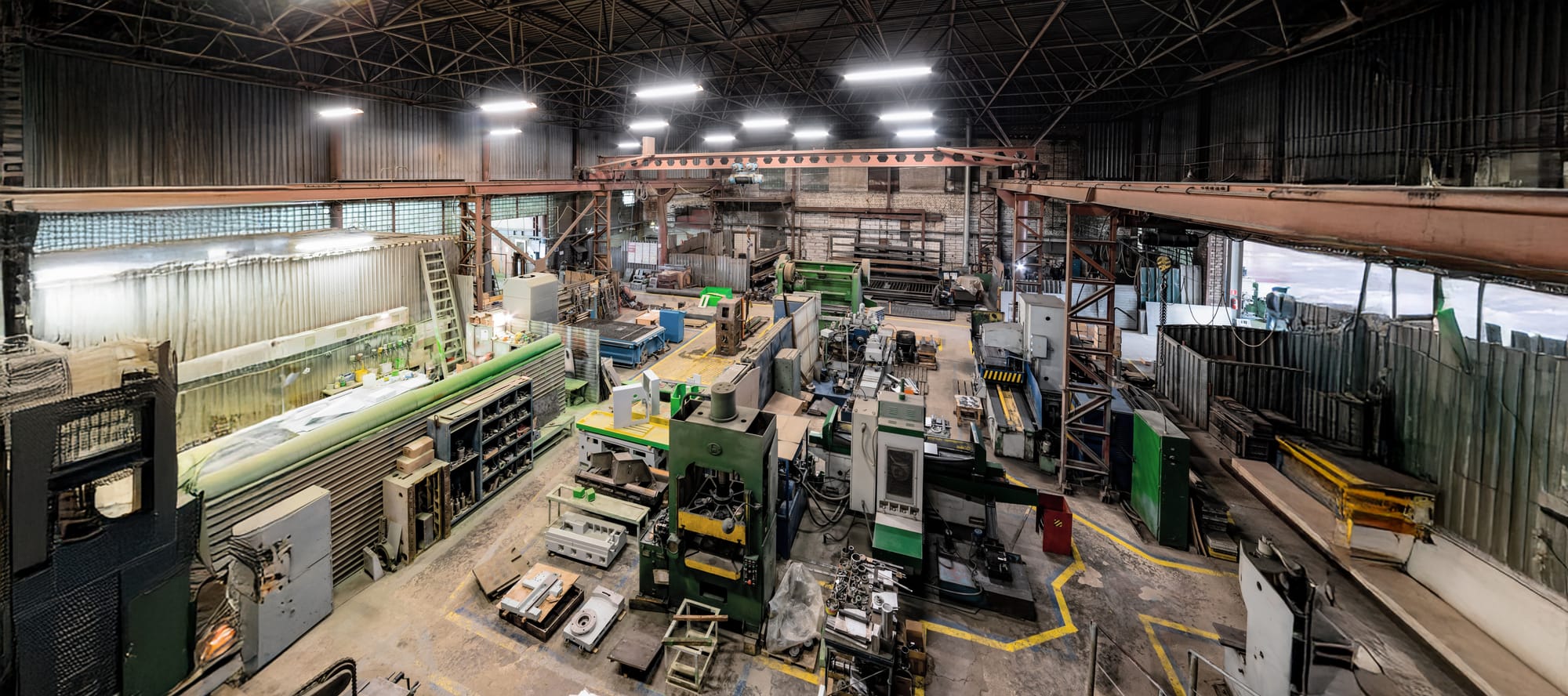
Finance wants a number. You have a fixed-asset register full of 1998 purchase prices.
That is where most plant closures actually begin. Not with the machinery, and not with the auction but with a request for the liquidation value of equipment nobody has valued in twenty years, on a deadline set by a lease, a lender, or a WARN notice.
The plant manager who gets that request has usually never run a closure. They have a depreciation schedule that is wrong, a voicemail from a machine dealer offering to “take a look at the CNCs,” and no basis to tell whether that call is their best option or their worst.
So we start where you start: with what it is worth, and with a number you can defend.
Grafe Auction appraises and auctions complete manufacturing facilities (production machinery and machine tools, process and packaging equipment, plant support and utilities, material handling, QC labs, tooling, and rolling stock). We provide certified equipment appraisals covering orderly and forced liquidation value, then run the sale that realizes it.
We have been conducting commercial auctions since 1959, we run roughly 290 auctions a year with more than 2,500 completed since 2019, and our registered bidder network exceeds 300,000.
We work with plant managers and VPs of manufacturing; directors of operations and corporate real estate; program managers running multi-site consolidations; owner-operators retiring without a succession plan; and the lenders, receivers, trustees, and equipment lessors who inherit a facility when a borrower stops answering.
Request an Equipment Valuation
Browse Current Industrial & Machinery Auctions
What Is an Industrial or Manufacturing Equipment Auction?
An industrial or manufacturing equipment auction is a competitive sale of a plant’s production and support assets (machinery, machine tools, process and packaging equipment, utilities, and plant support) run by a third-party auction company that appraises and catalogs the equipment, markets it to industrial buyers, sells it lot by lot, and coordinates de-installation and removal.
The format is usually online timed bidding. But the format is not what distinguishes one sale from another. Three things do.
- Who values the assets, and to what standard. A verbal number from a dealer who wants to buy your equipment is not a valuation. A certified appraisal to a recognized standard is, and it is what your lender, your auditors, and a bankruptcy court will accept.
- Whether the whole facility is covered. Specialists take their category. A full-service liquidation covers production, process, support, utilities, warehouse, lab, and office in one engagement, with one settlement statement.
- Who owns de-installation and removal. Machinery is anchored, grouted, wired, plumbed, and often holds residual product. Removal is millwright and rigger work, not loading a truck. Whoever plans it determines whether your building is empty on the date you promised.
“People think an auction is the bidding. The bidding is just one step of many. The auction is really an appraisal, a catalog, a marketing plan, and a removal schedule — and if any of those four are weak, the bidding cannot save it.”
— John Schultz, CAI, AMM — Partner, Chief Marketing & Technology Officer, Grafe Auction
What Is My Plant’s Machinery Actually Worth? OLV, FLV, and Fair Market Value
Used manufacturing equipment has several legitimate values depending on how much time you have to sell. Fair market value assumes a willing buyer and seller with no urgency. Orderly liquidation value assumes roughly 90 to 180 days. Forced liquidation value assumes a properly advertised auction with immediate sale. All three can be correct at once for the same machine.
Book value is not a guide. Depreciation tracks accounting life, not secondary-market demand. We routinely see fully depreciated equipment outperform a five-year-old machine, because there are hundreds of buyers for one and almost none for the other. The question is never “what is it worth” in the abstract. It is “what is it worth, sold how, by when.”
The Four Standards, in Plain Language
| Standard | What It Assumes | Typical Timeframe | Who Asks for It |
|---|---|---|---|
| Fair market value (FMV) | A willing buyer and a willing seller, both informed, neither compelled to act. Often the highest of the four. | No time pressure | SBA lending, business valuations, insurance, tax and estate work, buy-sell negotiations |
| Orderly liquidation value (OLV) | The seller is compelled to sell, but has a reasonable period to find buyers, on an as-is, where-is basis. The realistic middle ground. | Roughly 90–180 days | Asset-based lenders, borrowing-base certificates, write-down planning, restructuring |
| Net orderly liquidation value (NOLV) | OLV minus the real costs of getting there (de-installation, rigging, freight, short-term storage, marketing, and commissions). | Roughly 90–180 days | Lenders sizing an actual advance rate, the number closest to what you net |
| Forced liquidation value (FLV) | A properly advertised and conducted public auction with the seller compelled to sell with a sense of immediacy, as-is, where-is. | Roughly 30 days or less | Court-ordered sales, receiverships, foreclosure, hard-deadline closures |
Asset-based lenders commonly advance against a percentage of orderly liquidation value rather than book value, and an appraisal can materially change what your equipment supports as collateral.
What Raises and Lowers Machinery Value
Raises it:
- Documentation. Manuals, service records, tooling lists, load charts, control specs, and accurate hour meters convert buyer risk into buyer confidence, and confidence into bids.
- Machines still under power. A buyer who can watch a machine cut, run, or cycle pays materially more than one looking at a cold, disconnected machine.
- Recognized brands with parts and service availability. Haas, Mazak, Okuma, DMG Mori, Doosan, Makino, Hurco, Hardinge, Trumpf, Amada.
- Complete lines and complete cells. A working line with its controls, conveyance, and support equipment often sells for a large premium over the same assets sold piecemeal.
- Included tooling and workholding. Fixtures, chucks, collets, and tool packages are frequently worth a significant fraction of the machine and are the first thing buyers ask about.
- A broad catalog. Buyers who register for a machining center bid on the air compressor, the racking, and the tool crib once they are already planning a truck.
Lowers it:
- Obsolete or unsupported controls, missing drives, or machines partly cannibalized for spares before the sale.
- Unknown hours, broken meters, and no service history.
- Equipment that was disconnected and moved before cataloging, with no record of what went where.
- Process equipment that has not been drained, cleaned, or certified.
- Losing the maintenance team before the catalog is built. This is the most expensive and least anticipated loss in a plant closure.
For the value drivers that apply across all business equipment, see the key factors affecting equipment prices at auction. Unfamiliar with any of the terminology on this page? Our auction jargon glossary covers the rest.
Request a Certified Equipment Appraisal
Where Can You Sell Used Manufacturing and Industrial Equipment at Auction?
Grafe Auction sells used manufacturing and industrial equipment nationwide through competitive online auction. Founded in 1959, we run roughly 290 auctions a year with a registered bidder network exceeding 300,000, covering production machinery, machine tools, process and packaging equipment, plant utilities, material handling, and complete facility liquidations from single-plant closures to multi-site consolidations.
The useful version of this answer is about who buys, because that determines what your equipment brings.
Industrial equipment does not have one buyer pool. It has five, and they want different things:
• Job shops and contract manufacturers: buying capacity. They care about spindle hours, control generation, tooling included, and whether they can be running it next month.
• Used machinery dealers and brokers: buying to resell or export. They buy in volume, price against reconditioning cost, and move quickly on recognized brands.
• Same-industry operators: the craft brewery buying a canning line, the cabinet shop buying an edgebander, the processor buying a filler. They pay the most because they know exactly what it does.
• Rebuilders and integrators: buying machines to refurbish, retrofit controls, and resell. Interested in the assets others write off.
• Regional and local buyers: buying plant support, shop equipment, MRO, benches, and the long tail. Quietly responsible for a large share of lot count and more proceeds than sellers expect.
A sale that reaches only dealers leaves the same-industry premium on the table. A sale that reaches only local buyers strands the high-value machinery. Targeted marketing exists to put all five in the room on the same day, which is why we segment outreach by asset mix rather than blasting one list.
Buyer-side guidance on sourcing this equipment is further down this page, and trade-specific detail lives in our woodworking equipment buying and selling guide and our brewery build-out sourcing guide.
What Types of Industrial Auctions Are There?
Six structures cover almost every industrial sale: complete plant liquidation, partial or surplus liquidation, single-line or single-asset sale, secured-party or court-ordered sale, negotiated private treaty, and sealed bid. The right one depends on your deadline, whether the facility keeps operating, and whether a lender or court is involved.
| Structure | How It Works | Best Fit |
|---|---|---|
| Complete plant liquidation | Everything in the facility is cataloged and sold (production, process, utilities, support, warehouse, lab, and office) typically in one online event, sometimes split by category. | Permanent closure, consolidation into another site, or post-M&A footprint reduction where the building is being surrendered or sold |
| Partial or surplus liquidation | A defined subset is sold while the plant keeps running: a retired line, excess capacity, redundant machines after an upgrade, or idle equipment tying up floor space. | Active operations shedding idle assets, capacity rebalancing, or freeing floor space without disrupting production |
| Single-line or single-asset sale | One production line, cell, or high-value machine marketed individually, often to same-industry buyers who want it as a working system. | A complete line with real reuse value, or one machine valuable enough to justify its own marketing effort |
| Secured-party or court-ordered sale | Sale conducted by order of a secured party, receiver, or trustee, with documented valuation, controlled access, and reporting suitable for a court file or creditor waterfall. | Default, foreclosure, receivership, or Chapter 7 and 11 proceedings |
| Negotiated private treaty | Assets marketed at or near an established value and sold by negotiation rather than open bidding, sometimes after an auction for what did not sell. | Highly specialized equipment with a small, identifiable buyer pool, or situations requiring confidentiality |
| Sealed bid | Buyers submit confidential bids by a deadline, the seller reviews and awards. No open competition, but no public price discovery either. | Situations where confidentiality outweighs price competition, or where a governing policy requires it |
In practice most plant closures are not one structure. A typical engagement runs a complete liquidation for the bulk of the facility, splits rolling stock into its own event because truck buyers behave differently, markets one high-value line privately to same-industry operators, and moves the remainder to negotiated sale or scrap. The structure follows the assets, not the other way around.
For how each of these structures works in practice at Grafe, see our overview of methods of sale with Grafe Auction.
What Sells in a Plant Liquidation?
Nearly everything. The core categories are production machinery and machine tools, process and packaging equipment, plant support and utilities, material handling, QC lab and metrology, tooling and MRO inventory, rolling stock, and office and IT.
| Asset Category | Examples | What Drives Value | How It Should Be Lotted |
|---|---|---|---|
| Production machinery & machine tools | CNC machining centers (VMC, HMC), turning centers, Swiss lathes, EDM, surface and OD grinders, boring mills, press brakes, turret punches, fiber laser cutters, tube benders, hydraulic and mechanical presses, welders, ironworkers, saws | Make and model, control generation, spindle hours, condition, included tooling and workholding, whether it can be run under power at inspection | Individually. Machine tools have discrete comparable values and distinct buyers per class, bundling guarantees one clears cheap. Tooling lotted with its machine |
| Process & packaging equipment | Mixers, kettles, tanks and vessels, fillers, cappers, labelers, extruders, injection molding presses, thermoformers, ovens, proofers, fryers, retorts, homogenizers, separators, CIP skids, pumps, heat exchangers, conveyance | Sanitary versus industrial construction, capacity and throughput, controls generation, product contact materials, cleaning and certification status | By functional line where a system is reusable, individually for versatile standalone units. Complete documented lines command large premiums |
| Plant support & utilities | Air compressors and dryers, dust collection, boilers, chillers, cooling towers, transformers and switchgear, generators, overhead cranes and hoists, ventilation, process piping | Capacity, age, efficiency rating, whether removal damages the building, permit and inspection status | Individually for major units. Consistently outperforms expectations — compressors, chillers, and cranes draw buyers from well outside your industry |
| Material handling & warehouse | Forklifts, reach trucks, pallet jacks, pallet racking, shelving, mezzanines, conveyor, dock equipment, stretch wrappers | Make, capacity, hours, battery condition; for racking, quantity of matching components and beam profile | Lift trucks individually, racking in bulk runs. Covered in depth on our distribution center and warehouse hub |
| QC lab, metrology & tooling | CMMs, optical comparators, hardness and tensile testers, surface plates, gauge blocks, micrometers and indicators, tool cribs, fixtures, perishable tooling, tool presetters | Brand and calibration status, completeness of gauge sets, software and licensing transferability | Complete lab as a unit where possible, gauge and tooling sets grouped. Small lots here build bidder registration |
| MRO & spare parts inventory | Bearings, motors, drives, belts, hydraulic and pneumatic components, electrical stock, fasteners, lubricants, shop supplies | Quantity, brand, whether organized and identifiable, remaining shelf life | Bulk lots by category or by shelving section. Rarely worth itemizing, frequently worth more in aggregate than sellers assume |
| Rolling stock & yard equipment | Box trucks, semi-tractors and trailers, service vehicles, yard tractors, skid steers, sweepers, scissor and boom lifts | Year, mileage or hours, DOT and inspection status, title availability, tire and brake condition | Individually, and often in a dedicated event — vehicle buyers register, inspect, and transport on a different rhythm than equipment buyers |
| Office, breakroom & IT | Desks and seating, files, conference furniture, monitors, printers, breakroom appliances, lockers, plant floor terminals, network gear | Matching quantity, brand tier, condition; for IT, generation and licensing | Matching sets by quantity, mixed items in value bundles. IT handled with documented data destruction where required |
If your facility is primarily a warehouse or DC rather than a production plant, start on distribution center and warehouse liquidation hub instead.
Industries We Sell: Food & Beverage, Woodworking, Fabrication, Plastics & Packaging
Grafe Auction’s deepest industrial experience is in food and beverage processing, brewing and distilling, woodworking and millwork, metal fabrication and machine shops, and plastics, packaging, and printing. These are facilities where value is spread across production, process, and support assets rather than concentrated in a few machines.
Industry matters more in this vertical than in any other we work in, because the buyer pool is industry-specific. A canning line does not sell to a machine dealer. It sells to a brewery.
Food & Beverage Processing
Bakeries, dairies, meat and protein processors, co-packers, snack and prepared foods. Sanitary stainless construction, product-contact certification, and refrigeration all drive value, and the buyer pool is other processors who understand exactly what a piece of equipment does. Grafe has published work on buying meat processing and butcher shop equipment at auction, and food processing overlaps heavily with our supermarket and grocery equipment work on the refrigeration side.
Brewing & Distilling
This is our most documented industrial category. Our 2025 brewery equipment auction market report analyzed 2,000 lots sold, and we have covered both sides of the market: sourcing equipment for a brewery build-out and the closing chapter of two Minneapolis distilleries. Brewhouses, fermenters and brite tanks, canning and bottling lines, glycol systems, keg handling, grain handling, and stills all have an active, identifiable buyer pool of operators and dealers.
Woodworking, Cabinetry & Millwork
CNC routers, edgebanders, panel saws, wide-belt sanders, moulders, borers, spray booths, dust collection, clamps and presses. A category where complete shop packages routinely outperform the sum of the individual machines, because a cabinet shop wants a working shop rather than one machine. See our guide to buying and selling woodworking equipment at auction.
Metal Fabrication & Machine Shops
Machining centers, turning centers, press brakes, turret punches, fiber lasers, welding, grinding, and finishing, plus the tooling and metrology that goes with them. We sell this equipment regularly as part of plant closures and shop liquidations. We will also say plainly that if your sale is exclusively late-model CNC machine tools and nothing else, dedicated machine-tool auction houses have deeper specialist buyer relationships in that narrow category than we do, and we will tell you when that is the better fit.
Plastics, Packaging & Printing
Injection molding presses and auxiliaries, extruders, thermoformers, blow molding, granulators and material handling, printing presses, die cutters, folder-gluers, and finishing. Tonnage, controls, and auxiliary completeness drive value, and molds and tooling are often a significant separate category.
Beyond These Categories
We regularly sell assets that do not fit a tidy vertical, like specialty commercial equipment including medical, dental, fitness, and aesthetic gear, laboratory and optics equipment, theater and venue assets, and agricultural and implement equipment. If you are unsure whether your facility fits, send us the asset list.
Auction vs. Dealer Cash Offer vs. Negotiated Sale vs. Scrap
A competitive auction usually produces the highest recovery on a mixed facility because multiple buyer pools set the price. A dealer cash offer is faster and more certain and typically lands below fair market value. Negotiated private treaty suits specialized equipment with few buyers. Scrap is right for assets with no reuse market. Asset mix and deadline decide.
| Route | How It Works | Best Fit | Recovery & Certainty | Who Handles Removal |
|---|---|---|---|---|
| Full-service auction | The auction company appraises, catalogs, markets to multiple buyer pools, sells lot by lot, collects payment, and coordinates de-installation and removal. | Mixed facilities with production, process, support, and warehouse assets. Anything needing documentation for Finance, a lender, or a court | Highest recovery in most cases. Competition rather than negotiation sets price. Defined schedule, but final proceeds unknown until the sale closes. | Coordinated by the auction company across many buyers in scheduled windows |
| Dealer or liquidator cash offer | A dealer inspects, offers one number for a defined list, and resells the equipment itself. Often includes de-installation as part of the deal. | A single homogeneous asset class. Two late-model machining centers, or one production line and nothing else. Extremely compressed deadlines | Lower recovery. The dealer's margin, resale risk, and labor come out of your number first. Highest certainty: you know the figure up front. | Usually the dealer, which is a real advantage and part of what you are paying for |
| Negotiated private treaty | Assets marketed at or near an appraised value and sold by negotiation rather than open bidding. Often used after an auction for unsold lots. | Highly specialized equipment with a small, identifiable buyer pool. Situations requiring confidentiality | Can exceed auction on truly specialized assets with a motivated buyer. Slower and less predictable, with no price discovery | Negotiated per transaction, define it in the agreement |
| Scrap, recycle, or donate | Assets removed for scrap value, recycled, or donated with documentation for the file. | Cannibalized machines, obsolete controls, damaged equipment, and anything the lease requires removed regardless of value | Minimal to zero, occasionally negative after removal cost. Fast, certain, and the right answer more often than sellers expect. | Scrap or recycling contractor |
For a broader framework on evaluating any auction firm, including ours, see our guide to choosing the right auction company for your business liquidation.
Can You Sell Machinery While the Plant Is Still Running?
Yes, and it can produce a better result. Cataloging and marketing while equipment is still under power lets buyers see machines run at inspection, which raises bids materially. Production continues on your schedule. Removal is sequenced to begin only after your final run and after payment clears.
How it works in practice. We catalog around production, working zones and shifts that do not interfere with your schedule. Inspection days are scheduled with your EHS requirements and escort rules. Lots that must keep running until the last day are flagged with removal dates later than the rest of the sale, so buyers know exactly when they get them. Nothing leaves the building before your final run and before funds clear.
For a broader view of sequencing a facility wind-down, see our timeline for closing a commercial facility.
De-Installation, Rigging, and Safe Removal
Removal terms are defined before the auction opens, not after it closes. Each lot states what is included, who de-installs it, what insurance buyers must carry, and which removal window applies. Machinery requiring millwright or rigging work, de-energization, or drain-down is handled by qualified contractors under documented safety plans.
Millwright Work vs. Rigging Work
These are different trades and the distinction matters when you are scoping a project. De-installation is millwright work: disconnecting power, air, hydraulics, coolant, and controls; draining fluids; unbolting from foundations; breaking a machine down into movable sections. Rigging is the lift and move: skating, jacking, crane or forklift work, loading, and securing. A large machining center or press may need both, sequenced, by different crews. Every lot in our catalogs states which scope the buyer owns and which is handled for them.
De-Energization, Lockout, and Drain-Down
Machinery holds energy and product after the last shift. Hydraulic accumulators, pneumatic reservoirs, capacitors in drives, coolant sumps, hot oil, caustics, and residual product all have to be addressed before anyone puts a wrench on a machine. Lockout/tagout follows your plant procedure, not a contractor’s improvisation, and de-energization is documented per asset. Process equipment in food and beverage plants generally needs draining and cleaning before it can be inspected, let alone removed.
Foundations, Isolation Pads, and Floor Condition
Precision machines sit on grouted foundations, isolation pads, or inertia blocks. Presses are anchored into reinforced pits. Removing them leaves anchor stubs, grout, holes, or spalled concrete depending on method. Whether those have to be cut flush, ground, or patched is a lease and contract question, and it should be answered before the first machine moves rather than during the landlord’s walkthrough. Overhead work, crane rails, dust collection ductwork, process piping, involves fall protection, lift equipment, and exclusion zones.
Insurance, Contractor Documentation, and Site Rules
Buyers and their contractors provide certificates of insurance meeting your requirements before entering the building. Your site rules (PPE, check-in, restricted areas, hot-work permits, confined space, hours, escort requirements) are published as part of the removal terms and enforced at the door. If your organization requires additional-insured or named-insured endorsements, tell us during scoping and it becomes a condition of removal rather than a parking-lot negotiation.
Scheduling Load-Out
Removal is scheduled by window, dock, and zone. Buyers receive assigned times. Payment clears before release. Large riggers moving heavy machinery are sequenced separately from the long tail of local buyers taking benches and MRO lots. A site contact from our team is present through removal, and the building is walked at completion.
Racking, conveyor, and dock infrastructure teardown is covered in depth on our distribution center and warehouse liquidation hub rather than repeated here. For the buyer’s side of removal, see what to expect on auction pickup day and managing and transporting assets after the auction.
Environmental and Regulatory Closeout
Some plant assets cannot be sold until they are cleaned, drained, or certified, and some cannot be sold at all. Residual chemicals, hazardous waste, refrigerants, ammonia systems, oil-filled electrical equipment, and process residue all carry handling obligations that sit outside the auction and have to be sequenced with it.
We are not environmental consultants and this is not regulatory advice. Your EHS team, your environmental consultant, and your counsel govern.
Reuse is the best environmental outcome available for most of this equipment. A machine that goes back into production is not a machine being scrapped. See how auctions reduce environmental waste in business closures.
The practical sequence. Get your environmental consultant into the facility during our walkthrough, not after cataloging. That way assets requiring remediation are identified before they are photographed and marketed, and nothing is sold that legally cannot leave.
How Grafe Auction’s Plant Liquidation Process Works
1. Intake and Deadline Review
We start with the constraints, not the equipment. What is the closure or handover date? Has notice been issued, and when do maintenance staff leave? Is production still running? Are there lease, lien, lender, or court considerations? Who approves the plan? Thirty minutes here determines most of what follows.
2. Walkthrough, Appraisal, and Asset Inventory
An on-site assessment of every category: nameplates and capacity plates read, hour meters recorded, tooling matched to machines, process equipment assessed, utilities evaluated, retained assets flagged. This is also where the certified appraisal work happens if you need OLV, NOLV, or FLV for a lender, an auditor, or a court. You receive a documented asset inventory with retained-versus-sold clearly marked, reviewed with your team before anything is committed, and an honest read on what is scrap, what should be donated, and whether an auction is the right route at all.
3. Disposition Plan and Sale Structure
Sale structure, lotting approach, marketing plan, removal windows, insurance requirements, site rules, environmental sequencing, and a recovery range documented and approved before we catalog. Multi-facility programs are sequenced here, and categories with distinct buyer pools, like rolling stock or a single high-value line, are split into their own events or channels.
4. Cataloging, Photography, and Lot Creation
Our crew inventories, tags, photographs, and lots everything on site. Machine tools are catalogued by make, model, capacity, control, hours, and included tooling. Process equipment by type, capacity, construction, and controls. Utilities by capacity and rating. Photography is thorough and honest, including the damage.
For more on how cataloging decisions shape a sale, see the art of cataloging.
5. Targeted Marketing
The sale goes to our 300,000-plus registered bidders, plus segmented outreach into the pools your specific asset mix requires: machinery dealers and brokers, job shops and contract manufacturers, same-industry operators, rebuilders and integrators, and regional buyers. Industry publications, trade lists, email, and paid placement as the assets warrant. Where a closure is unannounced or distressed, marketing is structured around the confidentiality constraints.
6. Auction Execution
Online timed bidding, with inspection access where the site allows and live webcast for high-value machinery where it makes sense. Inspection days matter more in this vertical than any other. A buyer who sees a machine run bids higher. Bidding is monitored throughout and we stay in contact through the close.
7. Settlement, Removal, and Closeout
All funds collected and cleared before release. Removal by assigned window, dock, and zone with a site contact present. Millwright and rigging work executed per plan. Building walked at completion. You receive lot-level results and the documentation Finance needs to close the assets and your real estate team needs for the surrender file.
For the broader version of this process across all asset types, see our six-step auction roadmap and what sellers actually have to do before an auction goes live.
Lotting Strategy: Complete Lines, Individual Machines, and Bulk Lots
Machine tools sell best individually. Complete production lines often sell best whole, to same-industry buyers. Support equipment sells individually. MRO and shop items sell best in bulk value lots. A broad, complete catalog outperforms a curated one.
- Machine tools: individual. Discrete comparable values and distinct buyers per class. Tooling and workholding lotted with the machine it fits.
- Production lines: whole, where the line is reusable. A documented, working line sold as a system commands a large premium over its components, because a same-industry buyer is purchasing capability rather than machines.
- Plant support and utilities: individual. Compressors, chillers, cranes, and generators draw buyers from well outside your industry and consistently beat expectations when given their own lots and their own descriptions.
- MRO, tooling, and shop items: bulk value lots. Grouped by category or by shelving section. Rarely worth itemizing, frequently worth more in aggregate.
- Rolling stock: separate event where volume allows. Vehicle buyers register, inspect, and transport on a different rhythm. Splitting them out reaches both pools properly. See our 2025 automotive and transportation auctions review for what that buyer pool actually buys.
For lessons from running large multi-event sales, see multi-day, multi-event auctions and large-scale liquidations.
Retiring or Selling the Business? Equipment, Real Estate, or Both
If you are retiring without a succession plan, you have three paths: sell the business as a going concern, sell the equipment and real estate separately, or auction the assets and sell or lease the building. Auction usually produces the fastest, cleanest outcome when a business sale has stalled or the value is in the equipment rather than the enterprise.
A few things we have learned working with these sellers:
- The equipment is usually worth less than you remember paying and more than you fear. A certified appraisal replaces both anxieties with a number, and it is the right first step whether you sell to a buyer, a competitor, or the market.
- Real estate and equipment can go together or separately. Selling both at auction in a coordinated sale reaches buyers who want a turnkey facility. Selling equipment first and marketing an empty building separately sometimes nets more. Which is better depends on your building, your market, and your timeline.
- Discretion is available. Marketing can be structured to reach buyers without announcing your retirement to your customers and competitors before you are ready.
We have handled a number of these sales with long community histories. The closing chapter of two Minneapolis distilleries, a century-old bakery, and a 98-year-old lighting business. For the broader framework, see our business liquidation auction hub, our guide to selling commercial real estate at auction, and why commercial real estate auctions are a strategic alternative to a traditional sale. If the wind-down is driven by financial pressure rather than retirement, see a small business guide to survival and liquidation.
Talk to Us About Retiring or Winding Down
Liquidating Plant Assets for Lenders, Receivers, and Trustees
Lenders, receivers, trustees, and equipment lessors engage Grafe Auction directly for industrial collateral. We provide certified appraisals establishing orderly and forced liquidation value, a publicly marketed competitive sale documenting that fair market value was pursued, controlled site access, and lot-level settlement reporting suitable for a court file or creditor waterfall.
Industrial collateral has a specific problem: a defaulted borrower’s machinery is worth real money, and the collateral file usually contains an original invoice rather than a current value. A certified appraisal plus competitive public bidding solves the valuation defensibility question and the disposition question in one engagement.
We work with special assets and workout officers at banks and ABL lenders, court-appointed receivers, Chapter 7 and 11 trustees, chief restructuring officers, and equipment lessors managing defaulted or end-of-lease machinery. Where access is contested or a facility is uncooperative, we coordinate site entry with counsel and the receiver.
This section is deliberately brief because the full treatment lives on its own hub. See lender recovery, bankruptcy, and receivership auctions for commercial assets for court reporting, timelines, and creditor distribution, and understanding UCC filings and auction proceeds on lien priority. SBA lenders may also want SBA loan default and the recovery liquidation process.
Case Studies and Market Evidence
2025 Brewery Equipment Auction Market Report — 2,000 Lots Analyzed
Our most substantial piece of industrial market analysis. We reviewed 2,000 lots sold across brewery equipment auctions to establish what actually clears, what brings a premium, and where sellers consistently misjudge value. It is the kind of data almost nobody in the auction category publishes, and it is worth reading before you sell brewing or beverage assets. See the full 2025 brewery equipment auction market report.
Manufacturing and Industrial Liquidations
We have run plant closures and shop liquidations across food and beverage processing, woodworking, fabrication, packaging, and specialty manufacturing. For project-level detail, see insights from major industrial liquidations.
Mixed Fleet and Equipment Liquidations
Facilities where value spans production equipment, fleet, and inventory are the profile this page is built for. See Universal Marine RV’s strategic liquidation for a mixed-asset sale across equipment, vehicles, and inventory.
Businesses With Long Histories
Some of the most complex sales are the ones with the deepest roots. Two Minneapolis distilleries, Dinkel’s Bakery after a century in business, and Creative Lighting’s 98-year legacy. These sales are as much about handling a closure well as about the equipment.
Why Manufacturers Choose Grafe Auction
- A defensible number, not a guess. Certified equipment appraisals covering orderly, net orderly, and forced liquidation value, This is the documentation your lender, your auditors, and a court will accept, produced by the same team that runs the sale.
- The whole plant, in one engagement. Production machinery, process and packaging equipment, utilities and plant support, material handling, QC lab, tooling, MRO, rolling stock, and office catalogued and sold by one team, with one settlement statement, rather than split across three vendors with the hard categories left unsold.
- Buyer pools matched to your assets, not a single list. A registered bidder network exceeding 300,000, segmented into the pools your specific mix requires: machinery dealers, job shops, same-industry operators, rebuilders, and regional buyers. A canning line goes to breweries, not to a generic industrial blast.
- Documented industry experience where it matters. Food and beverage processing, brewing and distilling, woodworking and millwork, fabrication, and packaging.
- Removal treated as part of the job. Millwright and rigging scope defined per lot before bidding opens, insurance and contractor documentation collected before entry, payment cleared before release, environmental sequencing coordinated with your EHS team, and a site contact present through load-out.
- Licensed to sell where your plant is. Auction licensing is state by state, and it is the quiet reason many firms cannot take a job outside their region. We hold more than 400 licenses, which is what makes a genuinely national engagement possible rather than aspirational.
- Experience and continuity. Auctions since 1959, roughly 290 a year, more than 2,500 completed since 2019. Credentialed leadership like John Schultz who holds CAI and AMM designations from the National Auction Association.
Not sure which route fits yet? Tell us what facility is involved, roughly what is in it, and what date you are working toward. We will give you a read on what the assets are likely to do and what structure fits.
Request an Equipment Valuation
For Buyers: Sourcing Machinery and Production Equipment at Auction
Industrial auctions are among the strongest sources for production machinery, machine tools, process equipment, and plant utilities, frequently at a fraction of replacement cost with no lead time. Assets sell as-is, where-is with published inspection access and removal windows. Registration is free.
Is buying used machinery at auction actually a good idea?
The risk is real. You are buying as-is, without warranty, often without the ability to run the machine, on a removal deadline, with rigging and freight on you. A machine that needs a control retrofit or a spindle rebuild can erase the discount entirely. Buyers who lose money at industrial auctions almost always did one of three things: skipped inspection, ignored total landed cost, or assumed tooling was included.
What to check before you bid:
- Hours, controls, and support. Hour meter reading, control generation, and whether the manufacturer still supports it.
- What is included. Tooling, workholding, fixtures, chucks, programming, manuals, and auxiliaries..
- Condition you can verify. Attend inspection. If the machine can be run under power, run it. Check ways, spindles, and hydraulics.
- Removal scope and deadline. Who de-installs, whether you need a millwright and a rigger, what insurance you must carry, and which window you are assigned.
- Utilities at your facility. Voltage and phase, amperage, air volume and pressure, floor loading, ceiling height, and door width. Machines that will not fit or will not power up are the most avoidable mistake in this category.
- Total landed cost. Bid plus buyer’s premium plus tax plus de-installation plus rigging plus freight plus installation.
New to this? Start with buying equipment at auction: what every bidder needs to know, then inspection day: what to check before bidding on used commercial equipment, how a buyer’s premium works, and secure online bidding.
Worried whether a listing or a platform is legitimate? Start with how to verify the credibility of machinery listings.
Browse Current Industrial & Machinery Auctions
Frequently Asked Questions About Industrial & Manufacturing Equipment Auctions
Where Can I Sell Used Manufacturing or Industrial Equipment at Auction?
Grafe Auction sells industrial and manufacturing equipment nationwide through competitive online auction. Founded in 1959, we run roughly 290 auctions a year to a registered bidder network exceeding 300,000, covering production machinery, machine tools, process and packaging equipment, plant utilities, material handling, and complete facility liquidations.
What Is the Difference Between Orderly and Forced Liquidation Value?
Orderly liquidation value assumes the seller is compelled to sell but has a reasonable period, roughly 90 to 180 days, to find buyers on an as-is basis. Forced liquidation value assumes a properly advertised public auction with immediate sale, usually within about 30 days. Both can be correct for the same machine.
What Is Net Orderly Liquidation Value?
Net orderly liquidation value is orderly liquidation value minus the real costs of achieving it — de-installation, rigging, freight, short-term storage, marketing, and commissions. It is the figure closest to what a seller actually nets, and the one asset-based lenders most often use to size an advance rate.
Can Grafe Auction Provide a Certified Equipment Appraisal?
Yes. We provide certified equipment appraisals, covering fair market value, orderly liquidation value, net orderly liquidation value, and forced liquidation value for individual machines or complete facilities, suitable for lender reporting, audit and write-down purposes, and court proceedings.
How Long Does a Plant Liquidation Take?
Most run four to eight weeks from walkthrough to final removal, longer for large multi-line facilities. Cataloging takes one to two weeks, the auction stays open seven to fourteen days, and removal runs one to three weeks in scheduled windows. Machinery de-installation and environmental sequencing are the usual extenders.
Can You Auction Machinery While the Plant Is Still Operating?
Yes, and it can even produce better results. Cataloging and marketing while equipment is under power lets buyers see machines run at inspection, which raises bids. Lots that must run until the final day get later removal dates, and nothing leaves before your last run and before funds clear.
Who Buys Used CNC Machines and Production Equipment?
Five distinct pools: job shops and contract manufacturers buying capacity, machinery dealers and brokers buying to resell or export, same-industry operators who know exactly what the equipment does, rebuilders and integrators, and regional buyers who take plant support and shop items. Same-industry operators typically pay the most.
Do You Sell Machine Tools, or Just General Industrial Equipment?
Both. We sell machining centers, turning centers, press brakes, lasers, grinders, and the tooling that goes with them regularly as part of plant and shop liquidations. If your sale is exclusively late-model CNC and nothing else, we will tell you when a dedicated machine-tool house is a better fit.
Who Handles De-Installation and Rigging?
It is defined per lot before bidding opens. Freestanding equipment is buyer-removed. Anchored machinery requiring millwright work, de-energization, or drain-down is either buyer-removed under an approved and documented contractor, or handled by contractors engaged as part of the project.
What Happens to Equipment That Doesn’t Sell?
It is addressed in the disposition plan up front. Options include negotiated private treaty, a follow-on sale, donation with documentation, or scrap and recycling. Where a lease requires removal regardless of value, that is built into the removal schedule rather than left for you to solve afterward.
Can You Sell the Building Along With the Equipment?
Yes. Real estate and equipment can be sold together in a coordinated sale, which reaches buyers wanting a turnkey facility, or separately, which sometimes nets more. Which is better depends on the building and your timeline, and it is worth modeling both before deciding.
Can a Lender, Receiver, or Trustee Engage You Directly?
Yes. We work with special assets and workout officers, court-appointed receivers, Chapter 7 and 11 trustees, chief restructuring officers, and equipment lessors. We provide certified valuation, controlled site access, a documented competitive sale, and reporting suitable for a court file or creditor waterfall.
Is Buying Used Machinery at Auction Risky?
It carries real risk you can manage. Assets sell as-is without warranty, on a removal deadline, with rigging and freight on the buyer. Attend inspection, confirm what tooling is included, verify hours and control support, check your facility’s utilities and door widths, and calculate total landed cost before bidding.
Do You Work Nationally or Only in the Midwest?
Nationally. Grafe Auction is headquartered in Stewartville, Minnesota and conducts roughly 290 auctions a year across the country, with commercial and industrial engagements in Wisconsin, Ohio, Texas, New Jersey, Illinois, Georgia, Tennessee, Kentucky, and Minnesota.
How Do I Get Started?
Send us the facility location, a rough sense of what is in it, and the date you need the building empty. We will schedule a walkthrough, provide a documented asset inventory and a valuation, and tell you honestly whether an auction is the right route.
Working toward a closure date? Tell us the facility, the asset mix, and the deadline. We will walk the plant, give you a certified valuation and a documented inventory, and lay out the structure that fits.