
Commercial Real Estate Auctions for Buildings, Land & Facility Closures
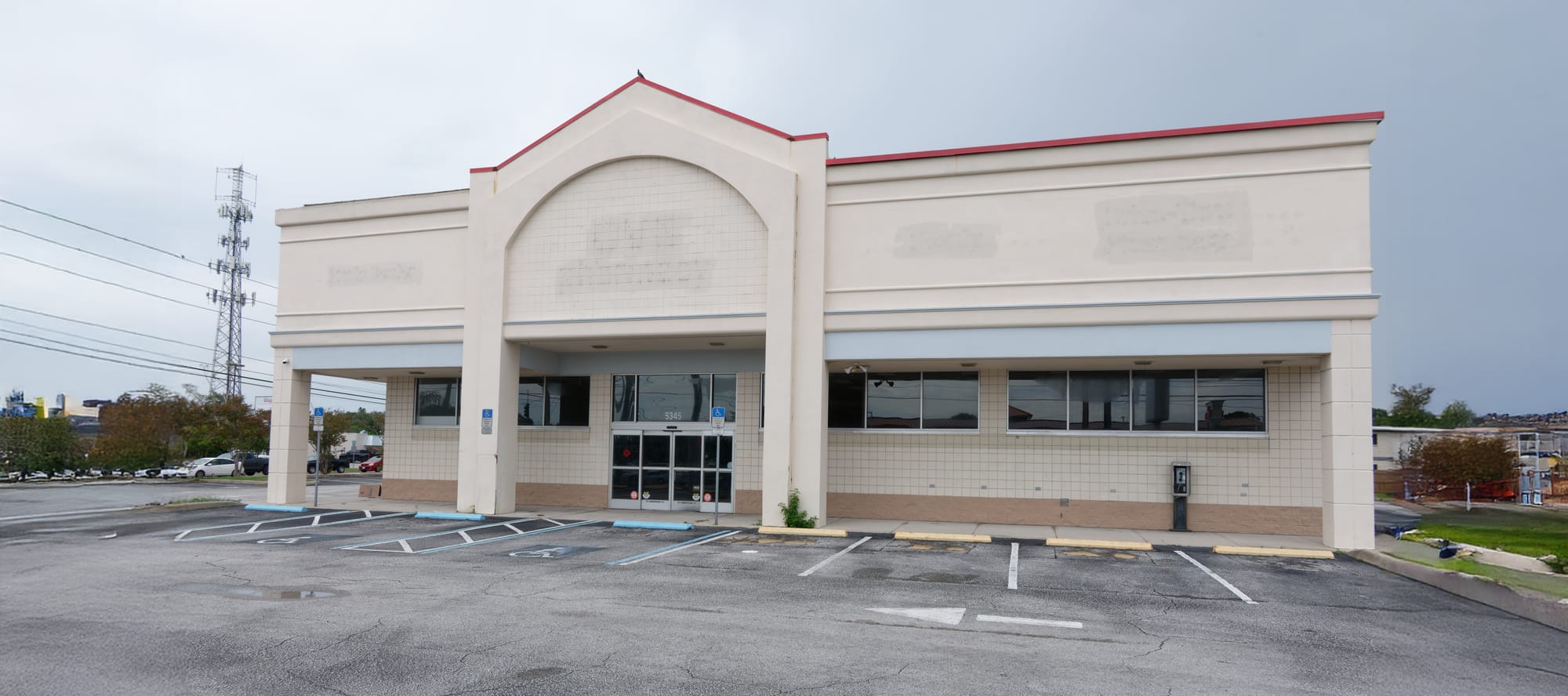
A closed plant, a vacant big-box store, a half-empty office building, a restaurant that never reopened, a dormitory with a failing rent roll, a parcel of development land that has sat on the market for two years. Each one costs the owner money every month: taxes, insurance, utilities, security, debt service. Each one has usually already been through a listing that didn't produce a buyer at a price anyone could agree on.
Grafe Auction helps owners, lenders, receivers, and estates sell commercial property through a publicly marketed, competitive live auction held at the property. We work with operating companies closing or consolidating facilities, corporate real estate and facilities managers, commercial lenders and special assets officers, court-appointed receivers and bankruptcy trustees, personal representatives and successor trustees, investors repositioning a portfolio, and the attorneys and CPAs who advise them.
Selling commercial property is not only about getting the price. It also matters when the sale happens and how defensible the result is. A listing can sit for months while carrying costs pile up, and a single negotiated offer leaves a lender, a court, or a board asking whether it was the best price available. A public auction answers that. The sale happens on a date set in advance, every qualified buyer competes under the same published terms, and there is a record of who bid and what the market paid. When the building's contents need to go too, Grafe Auction can sell them in the same project.
Talk to Grafe Auction About a Commercial Property
What Is a Commercial Real Estate Auction?
A commercial real estate auction is a publicly marketed, competitive sale of non-residential property: an industrial building, warehouse, retail center, office building, multifamily or student housing complex, hospitality property, special-purpose facility, or commercial land. The sale happens on a date set in advance, under terms published before bidding begins. The auction company prepares the property information, markets it to investors, owner-users, and brokers, runs previews, conducts the auction, and coordinates the signed purchase agreement through to closing.
The property is what you would find in any brokered sale. The difference is the method. A listing waits for a buyer to make an offer and then negotiates. An auction brings buyers to a single event and lets them compete. Buyers do their due diligence before the auction, not after, so the winning bid is a commitment instead of the start of another negotiation. Terms of sale, including how the seller confirms the result, deposit requirements, any buyer's premium, and closing arrangements, are set for each sale and published in advance so every bidder knows exactly what they are agreeing to.
Grafe Auction acts as the sale partner. We are not your attorney, title company, or tax advisor, and we do not give legal or tax advice. We provide the sale: property evaluation, preparation of the due diligence package, marketing to a national buyer network, property previews, the live auction, and coordination with your attorney and title company through closing.
Who We Work With and What They Sell
Different sellers hold different property, have different authority to sell, and route the decision through different people. The table below maps the ones we work with most often.
| Seller | Typical Property | Authority to Sell | Who We Work With |
|---|---|---|---|
| Operating company closing or consolidating a facility | Owner-occupied plant, warehouse, distribution center, store, restaurant, or office, often with its contents | The company's officers or board under its governing documents | Owner or CEO, CFO, corporate real estate or facilities manager, company attorney |
| Investor or property owner | Office, retail, multifamily, mixed-use, or industrial investment property; development land | The owner or the ownership entity's managers or partners | Owner, asset manager, partners, attorney, CPA |
| Commercial lender holding REO | Property taken back through foreclosure or deed in lieu | The lender as title holder after foreclosure or deed in lieu | Special assets officer, workout officer, lender's counsel |
| Court-appointed receiver | Income-producing or distressed property placed in receivership | The receiver, under the receivership order and court approval of the sale | Receiver, lender's counsel, the court |
| Bankruptcy trustee or debtor in possession | Real property belonging to a bankruptcy estate | Trustee or debtor in possession, with bankruptcy court approval | Trustee, debtor's counsel, creditors' counsel |
| Estate or trust | Commercial buildings, rental property, and land owned by a decedent or a trust | Personal representative or successor trustee | Personal representative or trustee, estate attorney, heirs |
| Business partners or shareholders exiting | Property held by a partnership or closely held entity being dissolved or bought out | Partners or members under the operating or partnership agreement | Partners, business attorney, CPA |
For lender, receivership, and bankruptcy work specifically, see our lender recovery, bankruptcy and receivership hub.
Why More Commercial Property Owners Are Considering Auction Right Now
Several pressures are hitting commercial property owners at the same time.
A large share of commercial debt is coming due. According to the Mortgage Bankers Association, 17% of outstanding commercial and multifamily mortgage balances, about $875 billion of $5.0 trillion, are scheduled to mature in 2026. Loans written when values were higher and rates were lower are being refinanced in a different market. When a refinance doesn't work, the owner, the lender, or a receiver needs to sell, and needs to show the price was fair.
Office vacancy keeps setting records. Moody's Analytics put the national office vacancy rate at 21% in the first quarter of 2026, another record high. Older and secondary office buildings, which are hardest to lease and finance, are exactly the properties where a listing tends to stall.
Retail closures are freeing up buildings. Coresight Research counted about 12% more U.S. store closures in 2025 than in 2024. Every closed store, restaurant, and distribution center leaves behind a building and the fixtures and equipment inside it.
In each case the seller's problem is the same. The property carries real costs, the buyer pool is thin and uncertain, and the decision makers need a result they can defend. An auction concentrates the available buyers into a single event on a known date.
Auction vs. Broker Listing vs. Sealed Bid vs. Off-Market Sale: What Works Best?
No one route is best. It depends on the property, the market, and how much time and carrying cost the seller can absorb. A broker listing usually makes sense for a well-leased, financeable property in a deep market with plenty of comparable sales. An auction is the better fit for a property with an uncertain value, a thin or specialized buyer pool, high carrying costs, or a seller who needs a firm date and a defensible result: vacant buildings, special-purpose properties, distressed or lender-controlled assets, and closed facilities.
Being direct about this matters, because choosing the wrong route costs the seller either months of carrying costs or money left on the table. Here is the honest comparison.
| Route | How It Works | Best Fit | Seller Control Over Timing | Record Produced |
|---|---|---|---|---|
| Live public auction | The property is marketed to a defined sale date; qualified buyers complete due diligence in advance and bid competitively at the property under published terms | Vacant, special-purpose, distressed, or lender-controlled property; closed facilities; properties with uncertain value or a thin buyer pool | High. The sale date is set at engagement | Complete. Marketing record, buyer registration and bidding, competitive result, signed purchase agreement |
| Broker listing | A listing broker markets the property at an asking price and negotiates offers as they arrive | Leased, financeable property in an active market with good comparables | Low. The sale happens when a buyer appears and terms are negotiated | Offer history and a negotiated contract, which can be hard to benchmark |
| Sealed bid or call for offers | Written offers are solicited by a deadline, reviewed, and the seller negotiates with the best one | Institutional sellers or public entities whose policy calls for it; larger investment properties | Moderate | Strong procedural record, weaker price discovery, because bidders can't respond to one another |
| Off-market or direct sale | The owner or a broker approaches a small number of likely buyers privately | Properties with an obvious buyer, such as a tenant, neighbor, or competitor | Moderate | Minimal. One price from one buyer |
| Foreclosure or sheriff's sale | The lender enforces its mortgage through the statutory foreclosure process | Lenders taking title; usually the step before an REO sale, not instead of one | Set by statute | Statutory record, but rarely the price a marketed sale would bring |
The comparison makes two things clear. First, carrying costs belong in the price comparison. A listing that brings a slightly higher price after many more months of taxes, insurance, utilities, and debt service can leave the seller with less. Second, an auction is not only for distressed property. It is a way to find the market price for a property where the price is uncertain. The Winona case study below is an example: the auction result came in more than $500,000 above the best offer received before Grafe Auction's involvement.
For a broader framework on evaluating any auction firm, including ours, see our guide to choosing the right auction company.
What Types of Commercial Property Sell Well at Auction?
Properties with a defined buyer group and a value that is hard to pin down from comparables tend to do best at auction. That covers vacant owner-user buildings, special-purpose facilities, value-add investment property, and land. Buyers make decisions from the due diligence package and the preview, so preparation affects results more than cosmetic condition does.
The table below maps what drives value across the property types we see most often.
| Property Type | Examples | What Drives Value | What Buyers Need to See |
|---|---|---|---|
| Industrial and manufacturing | Plants, machine shops, fabrication and processing facilities | Clear height, power, cranes, floor load, loading docks, zoning, environmental history | Building specifications, utility capacity, environmental reports, survey |
| Warehouse and distribution | Distribution centers, cold storage, flex buildings | Dock doors, clear height, column spacing, truck court, highway access | Site plan, dock and door counts, refrigeration systems, lease status |
| Retail | Former big-box stores, strip centers, standalone retail, grocery buildings | Location, traffic counts, parking, frontage, co-tenancy | Rent roll if leased, site plan, signage rights, any restrictions or covenants |
| Office | Single-tenant and multi-tenant office, medical office | Location, occupancy, building systems, floor plates, parking ratio | Rent roll, lease abstracts, operating expenses, building system condition |
| Multifamily and student housing | Apartment complexes, dormitories, senior housing | Occupancy, rent roll, unit mix, condition, proximity to campus or jobs | Rent roll, operating history, unit-by-unit condition, capital needs |
| Hospitality and event | Hotels, resorts, banquet and event centers, golf courses | Location, condition, brand or flag status, FF&E | Operating history, FF&E inventory, franchise status, condition reports |
| Restaurants and bars | Freestanding restaurants, bars, drive-throughs | Location, kitchen infrastructure, hood and grease systems, liquor license transferability | Equipment list, what conveys with the building, utility capacity |
| Special-purpose | Churches, schools, equestrian centers, auto dealerships, implement dealers, bowling alleys | Adaptability to other uses, zoning, land area | Zoning analysis, building plans, possible alternative uses |
| Land | Commercial pad sites, development parcels, industrial land | Zoning, utilities at the site, access, topography, entitlement status | Survey, zoning, utility availability, soil and wetland information |
| Mixed-use | Downtown buildings with retail below and apartments or office above | Income mix, condition, historic character | Rent roll, condition, any historic designation or restrictions |
Two other things matter as much as property type. The first is the due diligence package. A buyer who has the survey, title commitment, environmental reports, leases, and operating figures before the auction can bid with confidence, and confident buyers bid higher. The second is the preview. Buyers who have walked the building bid on what they saw, not on a discount for what they couldn't verify.
Licensing, Disclosure, and Due Diligence for Commercial Property Auctions
Requirements vary by state, by property, and by the seller's situation. Your attorney should confirm what applies to you. What follows is the general framework, using Minnesota statutes as the illustration. Grafe Auction is headquartered in Stewartville, Minnesota, and works within these requirements regularly.
Who Can Conduct a Real Estate Auction
Selling real estate generally requires a real estate license, and auctioneers are no exception unless the law creates one. In Minnesota, Minn. Stat. § 82.56 exempts an auctioneer bonded under section 330.02 from the broker license requirement only when the auctioneer is employed to auction the real estate by a licensed broker or has engaged a licensed attorney to supervise the transaction. Other states set their own rules. Grafe Auction holds auction licenses in every state that requires them and real estate broker licenses in Minnesota, and works with licensed joint venture partners on real estate auctions in other states. We also hold specialized dealer licenses and more than 400 business licenses. See why we hold over 400 licenses.
Authority to Sell
Before the property is marketed, it has to be clear who can sign the purchase agreement and deliver the deed. For a company, that is its officers or members under its governing documents. For a lender, it is the lender once it holds title after foreclosure or deed in lieu. For a receiver, it is the receivership order and the court. In Minnesota, Minn. Stat. § 576.46 allows the court to order that a general receiver's sale is free and clear of liens, with the liens attaching to the sale proceeds. Unpaid real estate taxes and assessments and federal liens are exceptions, and owners and lienholders can object. For a probate estate, the personal representative's power to sell comes from the probate code.
Required Seller Disclosures
Commercial sellers have fewer disclosure obligations than residential sellers, but they are not exempt. Minnesota's general seller disclosure statute (Minn. Stat. §§ 513.52–513.60) is written for single-family residential property. Two disclosures, however, apply to real property transfers generally. Under Minn. Stat. § 103I.235, the seller must disclose in writing, before signing a purchase agreement, all known wells on the property, and a well disclosure certificate is generally required at closing. Under Minn. Stat. § 115.55, subd. 6, the seller must disclose, before signing, how sewage from the property is treated, including any individual subsurface sewage treatment system and its known compliance status. In an auction these disclosures belong in the due diligence package, because the purchase agreement is signed on auction day.
Environmental Due Diligence
Commercial and industrial buyers, and their lenders, typically want a Phase I Environmental Site Assessment, and many will not bid without one. A Phase I conducted under the EPA's All Appropriate Inquiries rule (40 CFR Part 312), commonly using the ASTM E1527-21 standard, is what lets a buyer qualify for federal landowner liability protections. For former manufacturing, automotive, dry cleaning, or fuel sites, a seller who commissions the Phase I before the auction removes the biggest unknown from the bidder's calculation.
Title, Survey, Leases, and Liens
Buyers bid with more confidence when the title commitment and survey are available in advance and any exceptions are understood. Mortgages and other liens are typically paid from closing proceeds. Where the property is leased, buyers will want the rent roll, the leases, and estoppel certificates from tenants. Because the purchase agreement is signed when the auction ends, these items have to be ready before the sale, not gathered during a contingency period afterward.
Building, Fixtures, and Contents: What Conveys
In a facility closure, the line between real estate and personal property matters. Built-in items such as HVAC, electrical service, and plumbing generally convey with the building. Production equipment, racking, kitchen equipment, and furniture are usually personal property that can be sold separately. Some items, such as cranes, walk-in coolers, and bolted-down equipment, fall in between. Deciding before marketing begins which items convey with the building and which will be sold separately avoids disputes and lets each buyer group bid on what it actually wants.
Section 1031 Exchanges
Many commercial buyers, and some sellers, use a like-kind exchange under Internal Revenue Code § 1031 to defer capital gains on real property held for business or investment. Exchange buyers work under the statute's identification and closing deadlines, which makes a sale on a fixed date attractive to them. Sellers planning an exchange should talk with a qualified intermediary and their tax advisor before the auction.
How Grafe Auction's Commercial Real Estate Auction Process Works
Grafe Auction handles property evaluation, preparation of the due diligence package, marketing, previews, the live auction, and coordination through closing. The seller approves the terms of sale, provides access and property information, and signs the purchase agreement with the winning bidder. The seller's attorney and the title company handle the closing.
1. Intake and Property Evaluation
We start with the property, who has authority to sell, what is driving the decision (carrying costs, a loan maturity, a facility closure, an estate, a court order), and what has already been tried. We review comparable sales, market conditions, zoning, and the property's history from public records and the owner.
2. Due Diligence Package
We assemble the information buyers need to bid with confidence: survey, title commitment, environmental reports, building specifications, required disclosures, and, where the property is leased, the rent roll, leases, and operating figures. Gaps are identified early so they can be filled before marketing begins.
3. Terms of Sale
The seller and Grafe Auction agree on the terms of sale, and those terms are published to every bidder in advance: how the result is confirmed, deposit and closing requirements, any buyer's premium, and what conveys with the property. Where the building's contents are also being sold, the sale plan defines which items go with the real estate and which are sold separately.
4. Marketing
The property is marketed through Grafe Auction's online platform and its registered bidder network, supported by social media ads, targeted search and display ads, ads in digital trade publications, and signs on the property.
5. Property Previews and Tours
Public open houses are held before the auction, and private tours are arranged for qualified buyers who can't attend. Our staff are on site to explain the property, the terms, and how bidding works, especially for first-time auction buyers.
6. Live Auction at the Property
Bidding takes place live and in public at the property, with registered bidders competing in the open. Every bidder bids under the same published terms, and the result is visible to everyone in the room. Most Grafe Auction real estate auctions are held live and on site this way; some run online only.
7. Purchase Agreement and Closing
The winning bidder signs the purchase agreement and pays the deposit set in the terms of sale. Grafe Auction then coordinates with the seller's attorney, the buyer, and the title company through closing.
For what happens on the operational side of a closure, see our timeline for closing a commercial facility.
Selling a Closed Facility: The Building and Everything in It
This is where Grafe Auction differs most from a real estate brokerage or a real estate-only auction firm. When a company closes a plant, a distribution center, a store, a restaurant, or a hotel, it has two problems: a building to sell and a building full of equipment, fixtures, and inventory. Usually those go to two different firms on two different schedules, and the owner manages the gap between them.
Grafe Auction can handle both. The contents can be sold first, clearing the building and producing cash, with the real estate marketed for its own live auction afterward. Or a buyer who wants the building as an operating facility can be offered certain equipment with it. Either way, one firm plans the sequence, removal is coordinated around the real estate sale, and the owner deals with one team instead of two.
That combination matters most for specialized facilities. A food processing plant, a brewery, a restaurant with a full kitchen, a hotel with its FF&E, or a manufacturing building with crane systems all have buyers who value the building and certain equipment together, and other buyers who want only one or the other. Planning the sale around both groups is where value is gained or lost.
See our related hubs on business liquidation services, industrial and manufacturing equipment auctions, distribution center and warehouse liquidation, retail liquidation auctions, restaurant equipment auctions, and selling FF&E when a hospitality property closes.
Lender-Controlled, Receivership, and Distressed Property
When a commercial loan goes bad, the lender's choices about the real estate all lead back to one question: how do we get the most for the property, and how do we show it? Holding REO costs money every month. A negotiated sale to a single buyer can draw questions from participants, examiners, or the borrower about whether the price was fair. A receivership sale has to satisfy the court.
A publicly marketed live auction meets all of those needs. It produces a competitive price on a set date, and the marketing record, buyer registration, and bidding show the property was offered to the market on equal terms. That is the record a lender's file and a receiver's report to the court both need. The Winona student housing sale below was a receivership sale for a regional bank.
Where the real estate and the borrower's equipment are both collateral, Grafe Auction can sell both. See our lender recovery, bankruptcy and receivership hub and how business auctions benefit SBA lenders.
Selling Commercial and Development Land at Auction
Land is among the hardest property to value from comparables. No two parcels have the same zoning, access, utilities, and potential use, and the right buyer may be a developer, a neighboring owner, an investor, or an end user nobody would have predicted. An auction brings all of them to the same event.
Preparation matters even more for land than for buildings. Buyers want the survey, zoning, utility availability, access, and any soil, wetland, or environmental information before they bid. Larger tracts can be offered by parcel so that buyers can bid on the piece they want, which often brings more in total than selling the tract as a whole. Pre-auction work includes checking public records, confirming zoning and permitted uses, and talking with the owner about the property's history.
For residential property, see residential real estate auctions beyond foreclosures.
Purchase Agreements, Proceeds, and Closing
When the auction ends, the winning bidder signs a purchase agreement on the terms published before the sale and pays the required deposit. The transaction then closes the way any commercial sale does. The title company or closing attorney handles the deed, payoffs of mortgages and liens, prorations of taxes and rents, and payment of net proceeds to the seller.
The seller's record of the sale includes the marketing channels and materials used, buyer registration and preview attendance, the bidding result, the signed purchase agreement, and the closing statement. For lenders, receivers, trustees, and personal representatives, that record shows the property was offered to the market on equal terms and sold to the highest bidder under published terms.
Where the building's contents were sold in the same project, those proceeds are reported separately through Grafe Auction's settlement statement, which shows gross receipts, itemized costs of sale, and net, with lot-level results.
Case Studies: Winona Student Housing and the Balster's Implement Complex
150-Unit Student Housing Complex, Winona, Minnesota
A 150-unit dormitory-style apartment complex across from a university in Winona, Minnesota had come under the control of a regional commercial bank. Lighthouse Management Company was managing it as court-appointed receiver. In the six months before the bank took control, the rent rolls showed occupancy below 30% and inconsistent rent payments. The property had been assessed at almost $3.7 million in 2022, but much of it needed significant repairs, and traditional real estate methods had not produced a buyer. The receiver approached Grafe Auction in late 2022.
Grafe Auction marketed the property through social media, targeted search and display advertising, digital trade publications, and on-site signage, and held previews so bidders could see it before the sale. The live public auction brought a winning bid within the estimated target range, more than $500,000 above the best offer received before Grafe Auction's involvement. Read the full story of the Winona student housing auction.
Balster's Implement & Parts Co., Scotch Grove, Iowa
Balster's Implement & Parts Co. grew from a blacksmith shop founded in 1874 into an implement dealer, parts business, and Ford dealership that took up much of the small town of Scotch Grove, Iowa. After Les Balster died in 2009, the family decided to close it. Grafe Auction and Schultz Auctioneers ran a three-day sale in September 2011 that combined the contents and the real estate. Sixteen buildings were opened, and the contents filled more than 20 semi trailers.
The contents drew more than 2,000 buyers on the grounds and about 2,200 online bidders. The seven parcels that made up the 1.5-acre Balster's complex sold, mostly to local buyers. The family received three times what they had expected for the merchandise and buildings together. That is the facility-closure model at work: one sale plan, one marketing push, and buyers for both the contents and the property brought together in the same event. Read the full story of the historic Balster's Implement sale.
Why Owners, Lenders, and Receivers Choose Grafe Auction
- The building and its contents under one firm. Grafe Auction sells the real estate and the equipment, fixtures, and inventory inside it. One team plans the sequence, coordinates removal around the property sale, and reports both.
- A sale date, not an open-ended listing. The auction date is set when the engagement begins, so carrying costs have an end point and decision makers know when the result will arrive.
- A result you can defend. Public marketing, open previews, and competitive bidding under published terms produce the record a lender's file, a receiver's report to the court, a board, or a group of heirs needs.
- National buyer reach. Grafe Auction's online platform and registered bidder network, plus targeted advertising to investors, owner-users, and brokers, bring out-of-area buyers to the property alongside local ones.
- Licensed where we work. Grafe Auction holds auction licenses in every state that requires them and real estate broker licenses in Minnesota, and works with licensed joint venture partners on real estate auctions in other states, plus more than 400 business licenses.
- Experience and continuity. Grafe Auction has run auctions since 1959 and works in all 50 states and Puerto Rico.
Not sure whether auction is the right route for your property? Tell us what the property is, where it is, who owns it, and what is driving the decision. We'll give you an honest view of how it is likely to do at auction and what the sale should look like, including telling you when a broker listing would serve you better than we would.
For Buyers: Current Commercial Real Estate Auctions
Commercial real estate auctions are a way to buy industrial buildings, warehouses, retail and office property, multifamily and student housing, special-purpose facilities, and land on a known date, without a long negotiation. Buyers include investors, owner-users, developers, neighboring property owners, and 1031 exchange buyers. Due diligence happens before the auction, and the terms of sale, including any deposit, buyer's premium, and closing requirements, are published with each property. Browse current auctions and register to bid.
Frequently Asked Questions About Commercial Real Estate Auctions
How Does a Commercial Real Estate Auction Work?
The property is marketed to a sale date set in advance, under terms published before bidding begins. Buyers review the due diligence package and tour the property during previews, then bid competitively at a live auction held at the property. The winning bidder signs a purchase agreement and pays the required deposit on auction day, and the sale then closes through a title company or closing attorney like any commercial transaction.
Is Auction a Good Way to Sell Commercial Property?
It depends on the property. An auction is often the better fit for vacant, special-purpose, distressed, or lender-controlled property; closed facilities; and properties with an uncertain value or a thin buyer pool, where carrying costs are high and the seller needs a firm date and a defensible result. A broker listing is usually the better fit for a well-leased, financeable property in an active market with good comparables.
What Is the Difference Between Selling Commercial Real Estate at Auction and Listing With a Broker?
A listing waits for buyers to make offers at an asking price and then negotiates, with no set end date. An auction brings buyers to a single event on a known date and lets them compete under published terms. Buyers do due diligence before the auction, so the winning bid becomes a signed purchase agreement on the spot rather than the start of another negotiation.
What Types of Commercial Property Sell Best at Auction?
Properties with a defined buyer group and a value that is hard to pin down from comparables: vacant owner-user buildings such as plants, warehouses, and big-box stores; special-purpose facilities such as churches, schools, event centers, and dealerships; value-add multifamily and student housing; and commercial and development land. Grafe Auction's Winona sale of a 150-unit student housing complex in receivership brought more than $500,000 above the best offer received before Grafe Auction's involvement.
Can Grafe Auction Sell the Building and the Equipment Inside It?
Yes, and that is one of the main reasons owners call us when they close a facility. Grafe Auction can sell the equipment, fixtures, and inventory and also run a live auction for the real estate, sequencing the two so removal is coordinated around the property sale. Deciding in advance which items convey with the building and which are sold separately lets each buyer group bid on what it actually wants.
Who Is Allowed to Conduct a Real Estate Auction?
Generally, a licensed real estate professional, or an auctioneer working within an exemption the state allows. In Minnesota, Minn. Stat. § 82.56 exempts an auctioneer bonded under section 330.02 from the broker license requirement only when the auctioneer is employed by a licensed broker or has engaged a licensed attorney to supervise the transaction. Grafe Auction holds auction licenses in every state that requires them and real estate broker licenses in Minnesota, and works with licensed joint venture partners on real estate auctions in other states. Confirm the rules in your state with your attorney.
What Disclosures Does a Seller Have to Make When Selling Commercial Property?
Fewer than for a home sale, but some still apply. In Minnesota, the seller must disclose known wells on the property in writing before signing a purchase agreement under Minn. Stat. § 103I.235, and must disclose how sewage is treated, including any subsurface sewage treatment system, under Minn. Stat. § 115.55, subd. 6. Because the purchase agreement is signed on auction day, these disclosures belong in the due diligence package. Your attorney should confirm what applies to your property.
Do I Need a Phase I Environmental Report Before Auctioning Commercial Property?
It isn't always legally required, but for industrial and commercial property it is often practically necessary. Buyers and their lenders typically want a Phase I Environmental Site Assessment, conducted under the EPA's All Appropriate Inquiries rule and commonly the ASTM E1527-21 standard, to qualify for federal landowner liability protections. A seller who commissions it before the auction removes the biggest unknown from bidders' calculations.
How Does a Receiver or Lender Sell Commercial Property at Auction?
A lender that holds title after foreclosure or deed in lieu can sell REO at auction like any owner. A court-appointed receiver sells under the receivership order and with court approval. In Minnesota, Minn. Stat. § 576.46 allows the court to order a general receiver's sale free and clear of liens, with liens attaching to the proceeds, except unpaid real estate taxes and assessments and federal liens. A publicly marketed auction gives the lender's file and the receiver's report to the court a competitive, documented result.
Can I Buy Commercial Property at Auction as Part of a 1031 Exchange?
Often, yes. Commercial real property held for business or investment can qualify for a like-kind exchange under Internal Revenue Code § 1031. An auction on a fixed date can make the exchange deadlines easier to plan around. Work with a qualified intermediary and your tax advisor before you bid, and confirm the closing requirements in the published terms of sale fit your exchange.
What Are the Buyer's Premium, Deposit, and Closing Terms?
They are set for each sale and published in that property's terms of sale before bidding begins, so every bidder knows exactly what they are agreeing to. The terms cover how the result is confirmed, the deposit due from the winning bidder, any buyer's premium, the closing date, and what conveys with the property. Review them, along with the due diligence package, before you register to bid.
How Are Proceeds Handled When a Commercial Property Sells at Auction?
The sale closes like any commercial transaction. The title company or closing attorney handles the deed, pays off mortgages and liens, prorates taxes and rents, and pays net proceeds to the seller. Where Grafe Auction also sold the building's contents, those proceeds are reported separately through a settlement statement showing gross receipts, itemized costs of sale, and net, with lot-level results.
How Does an Owner or Lender Get Started With Grafe Auction?
Tell us what the property is, where it is, who owns it and has authority to sell, what is driving the decision, and whether the building's contents need to be sold too. We'll review the property, tell you how it is likely to do at auction and what the sale should look like, and tell you honestly if a broker listing would serve you better. Schedule a free consultation with our team.